
© Zelara
“The real bottleneck isn't the plumbing, it's the operating model.“
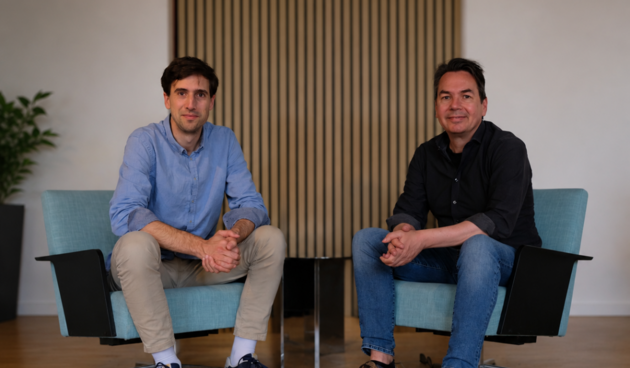
Björn Heckel & Nikolas Schriefer, Co-Founders of Zelara
InterviewShare on:
For decades, marketing technology has been built around one unit: the campaign. The journey. The segment. Never around the individual customer. Berlin-based startup Zelara was founded to change exactly that. Co-founders Björn Heckel and Nikolas Schriefer bring a combined track record of building customer engagement systems at Salesforce, Uber, HelloFresh, and beyond – and they know better than most where the architecture breaks down. With €3 million in pre-seed funding led by NAP, Zelara is now building the system they always wished existed: one that learns from every interaction and gets smarter with each one.
In this interview, the two founders explain why the real bottleneck in lifecycle marketing isn't data or tooling but the operating model itself, how Zelara sits on top of existing CRM infrastructure without replacing it, and what it means for a brand to finally move from campaign-centric to customer-centric communication. They also talk about what Berlin's ecosystem offered them at the start – and why the city's earlier generation of builders made the current one possible.
Zelara was born out of a shared frustration: despite years of investment in CRM and marketing technology, most brands still communicate with customers through static rules and predefined journeys. What kept the industry stuck – and why is now the right moment to change that?
Björn Heckel: What kept the industry stuck is the unit everything is built around. For decades, marketing technology has been organized around the campaign, the journey, and the segment – never around the customer. These systems are workflow engines: built to execute decisions people already made, not to learn and make the next decision better. The feedback step – what actually worked for this specific person – was never part of the architecture. That isn't a configuration problem you fix with another feature; it's a foundation problem. So we built Zelara from the opposite starting point: the individual customer.
Now is the right moment because the step that was always missing has only recently become possible: closing the loop at the level of one person. A team can hand-build ten emails and let a system pick the winner, but the result can never be better than those ten. The ceiling lifts when the same marketers can take their ten good ideas and turn them into a hundred on-brand variants – and the system can then decide, for each individual, which one they should get and when. Five years ago we could only have built another decisioning tool. That's the difference between a faster workflow engine and a self-improving system.
Zelara sits on top of existing tools like Braze or Klaviyo rather than replacing them. What was the thinking behind that decision – and how does the compound learning loop actually work in practice?
Nikolas Schriefer: We're deliberate about a distinction: the intelligence is architected around the customer, but the deployment is a non-invasive layer. Asking a brand to rip out Braze, Klaviyo, or their data warehouse means a multi-month re-platforming project – exactly the friction that kills adoption. With Zelara you change what your marketing is organized around – from campaign-centric to customer-centric – on top of the infrastructure you already run. That's why Zelara goes live in days, not months, and why "we improved the result without replacing a single system" is a sentence we can actually say.
In practice, the loop is three steps per customer. Craft: your team and the system build the content library together – your marketers bring the brand, the angles, the ideas that actually land; the system extends those into variants from your existing assets, in your voice, inside your guardrails; your team shapes and signs off on what goes in. Decide: from that library, the system decides for each individual person what they receive, on which channel, at what moment. Evolve: it learns from every outcome and runs again, automatically.
The human in that loop isn't a safety net bolted on at the end – human creativity is a performance input, and the results back that up. The AI multiplies that creativity across every customer; it doesn't replace it. That's the part no competitor closes: human-and-machine content on one side, a genuine per-customer communication plan on the other.
At bunq, Zelara drove a 66% reactivation lift – successfully winning back dormant customers – without any changes to the existing CRM infrastructure. What made that result possible, and what does it tell you about where the real bottleneck in lifecycle marketing lies?
Björn Heckel: What made it possible is that bunq already had everything most people assume is the hard part: the data, the channels, the customers. What was missing was a system that could turn all of that into a distinct decision for each individual – the right message, on the right channel, at the right moment, learning from what happened. We didn't add infrastructure. And the lift was measured against a control group running bunq's existing campaigns.
What it tells us: the real bottleneck isn't the plumbing, it's the operating model – specifically, the human sitting inside an open loop. Teams keep being told they need a better data stack or another tool. But in the old model, a person has to design the journey, hand-build every variant, read the report, and start over. The loop only closes when a human closes it – every single time. Remove that constraint, and the lift is already sitting in the data you own.
You have built customer engagement systems at Uber, HelloFresh, and Salesforce. What did those experiences teach you that you couldn't have learned any other way – and what did you deliberately do differently with Zelara?
Nikolas Schriefer: Between the two of us, we spent years building exactly the systems we now challenge: Björn spent more than two decades building customer engagement and data platforms at Salesforce, Uber, and HelloFresh; I founded and sold an AdTech company before leading the Global AI team at HelloFresh. What you can't learn from the outside is exactly how far the campaign model can be pushed and where it stops – that personalization, in practice, usually meant smaller segments, and a segment of one was never something the architecture could reach. We also saw both ends of the funnel: in AdTech, enormous effort goes into optimizing acquisition, and then the customer is handed to a lifecycle system that flattens them back into a segment. The most valuable asset a brand owns – the individual relationship after the first purchase – was the part nobody was building for.
Zelara is what you get when you take those two decades of experience and add what's newly possible. We changed the unit: we built from the individual customer up, not the campaign down. We put AI where the real constraint sits – not replacing the marketer's creativity but scaling it, so a team's best ideas can reach every customer individually instead of being averaged across a segment. And we prove value early on a concrete, high-stakes use case and build from a measured result, not a promise.
As AI agents increasingly mediate how consumers discover and interact with brands, first-party data is becoming more strategically valuable. How does Zelara help companies make the most of what they already have?
Björn Heckel: The ground is shifting: AI agents increasingly browse, evaluate, and decide on a consumer's behalf, so the top of the funnel is becoming more mediated and less directly ownable. In that world, the asset you actually control – the relationship with your own customers, and the first-party data that comes from it – is the strategic high ground. Yet most companies barely activate it. It sits in a stack that can execute segments and rules, but can't learn from the individual.
Zelara turns that data from a static archive into a compounding advantage. It uses your existing first-party data and your existing brand assets to decide, for each individual customer, what they receive – then learns from every outcome and gets sharper. It learns in two directions at once: it adapts the plan for one person the way a good conversation partner would, and it finds patterns across everyone. One brand learned that Polish customers living in Germany respond better in English than in either language you'd have guessed. No rule in a campaign builder was ever going to surface that. In a market where content generation at scale is quickly becoming table stakes, what compounds is learning at the individual level – and that learning is proprietary to you.
Both founders have deep roots in the international tech scene, yet Zelara is based in Berlin. What drew you to build here – and what does Berlin's ecosystem offer that matters for a company like yours?
Nikolas Schriefer: Berlin has the two ingredients a company like ours needs at the start, in one place: talent and capital. There's a deep pool of engineering and product talent, a thriving startup community, and early-stage investors ready to back ambitious companies. Our own pre-seed came together largely through relationships built in this scene. And Berlin is simply a great city to live in, which means it pulls talent from all over the world. For two founders with international roots building an AI company, that combination is hard to beat.
There's also a reason the community is this strong now. An earlier generation of companies built out of Berlin – Rocket Internet, Zalando, Delivery Hero, HelloFresh – trained a generation of operators, seeded the angel and VC capital that's available today, and proved that category-defining companies can be built from here. We've both spent time inside that world and have seen that lineage up close. Now we're part of the next generation standing on what they built.
With the pre-seed funding secured, what are the next milestones for Zelara – and what would a successful 2027 look like?
Björn Heckel: Near-term, the pre-seed funds two priorities in parallel. On the product side, we're making the decisions at the individual-customer level even more precise and expanding across additional lifecycle touchpoints. On the growth side, we're growing the team and building on the early results. Both point at the same goal: showing that a system built around the individual customer beats the campaign-centric status quo across industries and company sizes.
A successful 2027 is when that stops being a strong individual result and becomes a repeatable pattern. We're deliberately working closely with a selected number of partners across fintech, e-commerce, digital marketplaces, travel, and subscription services – customer bases that could hardly be more different – and success means proving the model holds reliably across all of them. The decisive part is that the advantage compounds: every interaction makes the system smarter, so companies that start now build a learning lead that later competitors can't close overnight. By the end of 2027, it should be visible who switched early to a customer-centric system and who is still running static journeys and segments – and Zelara should be the system that defined that shift.
Thanks for the great conversation.