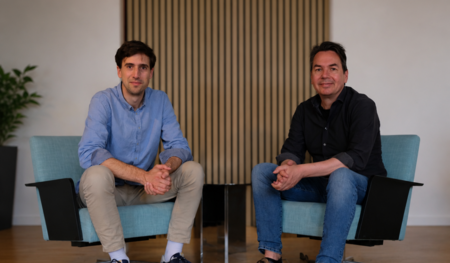

© Ottobock
“We shouldn't think of diversity as a corrective measure, but as a design principle.“
Martin Böhm, Chief Experience Officer at Ottobock
InterviewShare on:
AI-generated images of people — but people with prosthetic limbs or limb differences are often missing from them entirely, or shown in distorted ways. With “Dear AI“, Ottobock, the MedTech company with roots in Berlin (founded in 1919, now headquartered in Duderstadt), has launched a campaign designed to change exactly that — not against AI, but for an AI that represents everyone. Together with Berlin-based PRESENCE Creative Studio and more than 80 brand ambassadors worldwide, Ottobock developed a series of open letters addressed to AI itself — as posters, films, and social media content.
At the heart of the initiative is the "Dear AI Community Library": an open dataset curated by prosthesis users themselves, with technological support from Microsoft. In this interview, Martin Böhm, Chief Experience Officer at Ottobock, talks about how the campaign came together, why representation cannot be a fix applied after the fact but must be built in from the start — and what Berlin's diverse AI ecosystem can contribute to this conversation.
Mr. Böhm, with "Dear AI," Ottobock speaks directly to Artificial Intelligence — an unusual communication approach. How did this idea come about, and why was an open letter the right format for this topic?
The idea came from a simple observation: AI can only learn from what it has already seen. It became clear that people with amputations or limb differences either don't appear in AI-generated images at all, or are shown unrealistically — and when they do appear, often in distorted ways, for example as cyborgs rather than as people going about their everyday lives.
This isn't just about better AI images. It's about who is visible in tomorrow's digital world — and who isn't. That's the question we wanted to make visible with "Dear AI." An open letter was the right format for that. It allows for a direct, personal address by the users themselves and makes clear that behind the data are real people with real life stories. Our goal was to add something meaningful and human to AI: authentic perspectives that were missing from the training data until now.
The campaign doesn't present itself as criticism of AI, but as something it wants to add to it. How does Ottobock approach the fact that the very technology that has shown representation gaps is now also meant to become part of the solution?
We don't see AI as the cause of the problem, but as a mirror of the data it was trained on. If certain life realities are missing from that data, they will logically be missing from the results too. That's why we wanted to shift the discussion away from pure criticism and toward active participation.
Our approach is this: if AI learns from data, then the people who have so far been misrepresented or not represented at all must get the chance to help shape that data. That is exactly what the #DearAI Community Library makes possible. We're not just giving AI feedback — we're providing it with authentic material that has been selected and contextualized by prosthesis users themselves.
At the heart of the initiative is the "Dear AI Library" — an open dataset that prosthesis users contribute to themselves. How is this participation process designed, and what role does self-determination play for the people contributing their images?
From the very beginning, it was important to us that neither Ottobock nor Microsoft decide how people with amputations and limb differences should be represented. That decision has to lie with the people who actually live that experience.
That's why prosthesis users around the world submitted their own images and videos. In working groups, community members then selected, curated, and annotated this material. Together, they defined what an authentic, respectful, and realistic representation looks like — and used that to build the database.
A single dataset, however open, is up against training data from global AI models that are many times larger. How realistic is it that "Dear AI" will actually have a measurable impact on large image models — and what else needs to happen?
We shouldn't measure impact solely by the size of a dataset. What matters is the quality and relevance of the data. The #DearAI Community Library was deliberately built to close exactly the gaps that exist in many AI systems today.
Of course, a single dataset won't transform the entire AI world overnight. But it creates a concrete, immediately usable building block for developers, researchers, and creatives. Beyond that, we need a fundamental shift in thinking: representation has to be considered during the development of AI systems, not added afterwards. Diverse datasets, community participation, and responsible AI governance need to become the standard.
Berlin is considered one of Europe's most dynamic AI ecosystems, with startups, companies, research institutions, and public organizations working on trustworthy AI. The campaign itself was created with the Berlin studio PRESENCE Creative Studio. How does a project like "Dear AI" fit into this Berlin landscape, and what can the city contribute to the topic of fair and inclusive AI?
Berlin connects technology, creativity, science, and social innovation in a distinctive way. That's exactly why the city was an ideal place for a project like "Dear AI."
The "Dear AI Library" is set to be released as an open-source platform in July 2026. What happens after that — how does a campaign turn into a sustainable project that doesn't disappear after the first attention cycle?
For us, the release was never the end goal — it was the beginning of a long-term development. The #DearAI Community Library is an open offer to the AI community worldwide. Developers, researchers, companies, and creatives can work with it and keep using it. We want it to become a living project that grows with the community.
In the long run, this is about permanently improving the quality of representation in AI — not for a single campaign cycle, but for the next generation of digital systems.
Beyond people with prosthetics, misrepresentation affects many other groups underrepresented in AI training data. Could "Dear AI" serve as a model for other communities — and what does the AI industry as a whole need to do differently so that representation is considered from the start?
Absolutely. We don't see "Dear AI" as an exclusive project for prosthesis users. In fact, it could be seen as a kind of blueprint for community-based representation in AI systems. The principle is universal: people shouldn't only be included once problems become visible — they should be involved from the moment the data that AI is built on is being shaped. When those affected can define for themselves how they want to be represented, more authentic and inclusive systems emerge.
We shouldn't think of diversity as a corrective measure, but as a design principle. Responsibility doesn't begin with the finished product, model, or system — it begins with the data, the processes, and the people involved in creating them.
Thanks for the great conversation.
Note: This interview was originally conducted in German and then later translated into English language.